
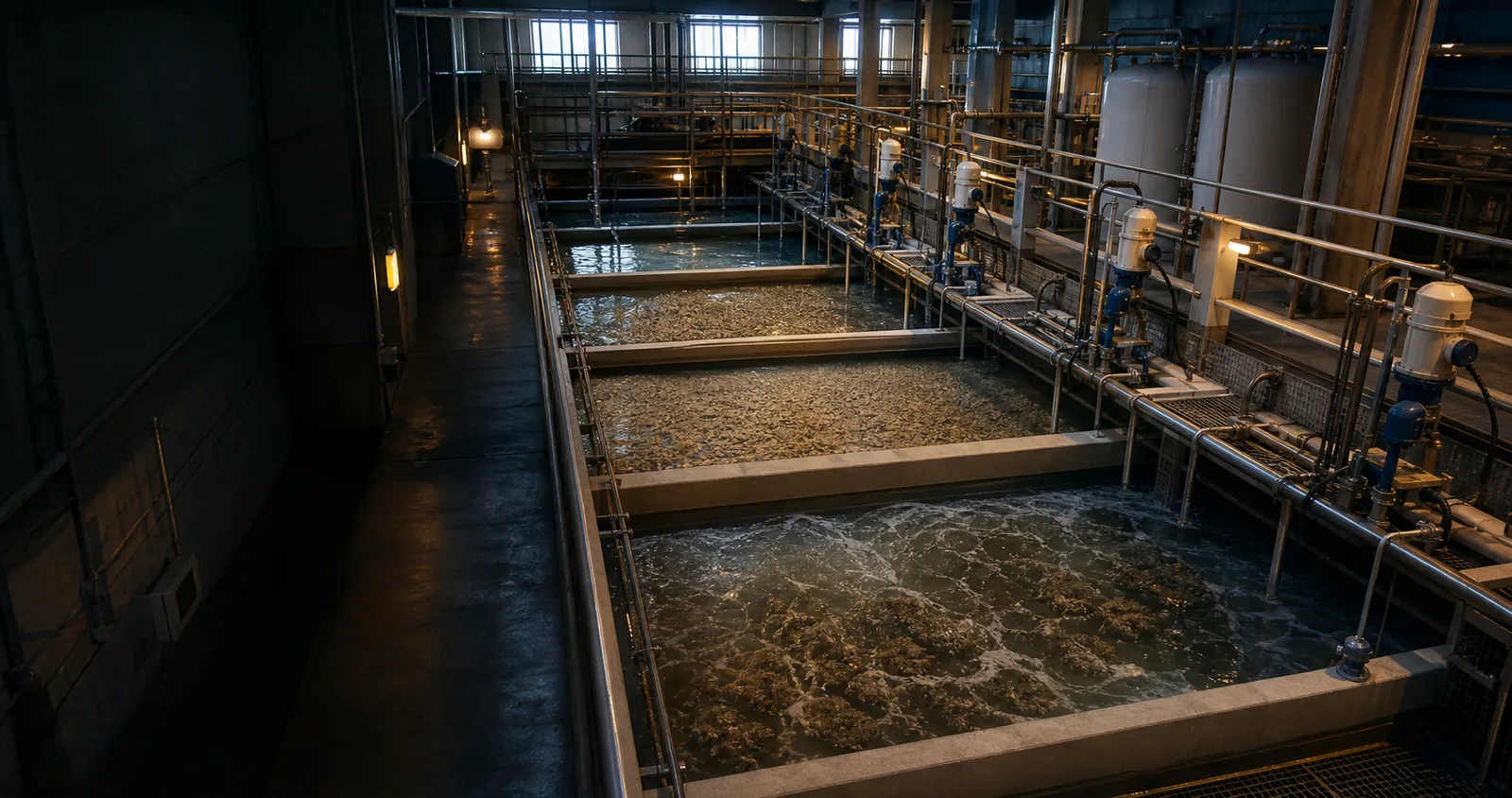
Define the purchasing duty
An industrial ETP is a treatment system, not one fixed polymer duty. Procurement should identify which stream, addition stage and separator the proposed polyelectrolyte flocculant must serve before selecting a family or accepting a blanket recommendation.
Keep the proposed commercial product connected to the feed, preparation route and separator that will decide acceptance.
Separate the actual treatment stages
Identify equalization, primary coagulation, clarification or flotation, and sludge dewatering. The suitable product and endpoint can differ between these stages. Keep current chemicals and pH with the stream delivered to the candidate.
The mechanism guide distinguishes primary destabilization from the subsequent aggregation duty.
Include representative batch variation
Record normal and difficult production batches, cleaning influences, flow, solids and water chemistry. Test material from the actual contact point rather than a conveniently settled tank sample. Compare candidates with stable upstream treatment and controlled preparation.
Use the jar-test procedure to keep batch changes from being mistaken for a grade advantage.
Award against the correct separator
Retain effluent solids, settling or float behavior, sludge removal and throughput for the targeted unit. Sludge-dewatering approval requires its own cake and liquid-return evidence. Do not extend a primary-clarifier result to centrifuges or a DAF without confirmation.
Keep dissolved-pollutant and compliance requirements separate from a demonstrated suspended-solids result.
Check an apparently favorable result
If the best sample passed only one easy production batch, mark the remaining feed cases as unqualified. One family can be a useful starting point without becoming an unrestricted all-ETP product claim or a guaranteed treatment dose.
Record unresolved conditions separately from completed qualification. A proposed benefit is not a measured plant result.
Keep an acceptance record
Attach candidate code, sample lot, preparation, feed condition and measurement method to the purchase decision. Preserve failed points as well as the preferred condition so later supply can be reviewed against the actual evidence.
| Requirement | Evidence | Approval boundary |
|---|---|---|
| Stage | Defined stream and addition point | Product role is clear |
| Variation | Normal and difficult batches | Samples represent intended use |
| Acceptance | Unit-specific outputs | Approval stays within the tested stage |
Request the right sample and quotation
Send a concise treatment sketch, batch variation, current chemicals, targeted separator and measured limits. State whether procurement concerns one dosing point or multiple separately qualified duties.
Include quantity, destination and document needs in the sample and RFQ record. Review quality and supply controls with Gongyi Xinqi Polymer Co., Ltd.; confirm the offered grade and commercial terms before ordering.
Request a product and supply review
Send the feed, separator and intended purchase scope.