
Do not diagnose from one visual symptom
Cloudy overflow, small floc, sticky sludge, poor drainage or high centrate solids can appear under both chemical and mechanical faults. Compare feed condition, polymer solution, pump delivery, contact energy and separator state before calling the problem overdose.
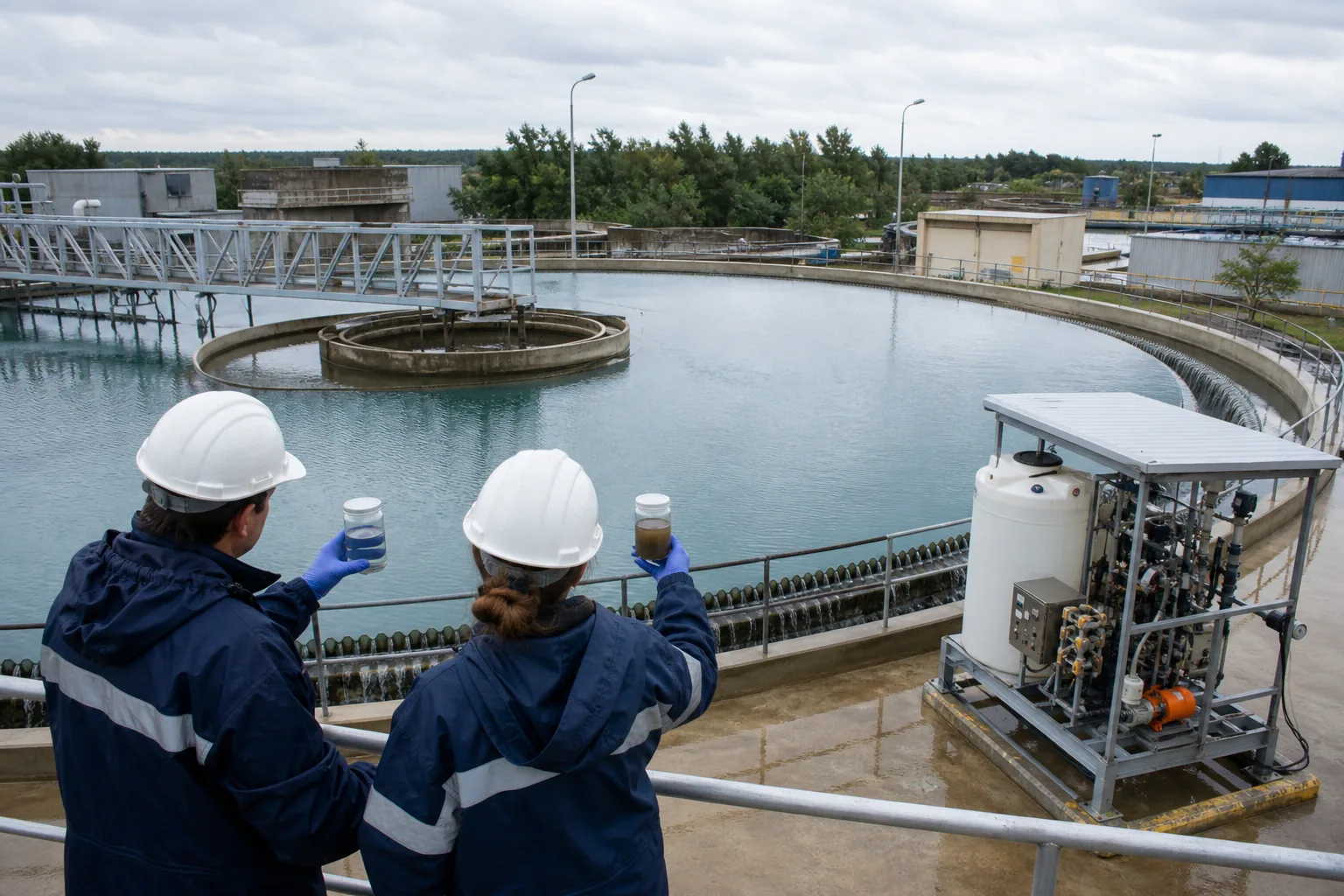
Take paired samples before and after polymer addition and retain the current feed solids, pH, conductivity, flow and upstream chemical dose.
Rebuild a short dose curve
Run a blank and points below, at and above the current active dose using verified fresh solution. If quality improves as dose falls, overdose is plausible; if it improves as dose rises, underdose or changed demand is more likely.
Keep mixing identical. A changed jar program can hide the very dose effect being investigated.
Inspect preparation and calibration
Confirm neat product, stock concentration, batch volume, maturation time and solution age. Check pump stroke, actual output, dilution water and blocked injection hardware. An unintended concentration change can double active dose while the control setting appears unchanged.
Look for fisheyes, gels, separated solution or contamination by an oppositely charged product.
Separate chemistry from shear
If floc forms then disappears, repeat the test with controlled shear and inspect the transfer path. A dose increase may briefly enlarge floc yet worsen breakage or residual polymer. Move or dilute the application point only through a measured trial.
For dewatering, observe centrate or filtrate together with torque, belt drainage and cake release. For clarification, pair overflow quality with bed or float behavior.
Correct one variable at a time
Return to the last verified operating window, adjust active dose in small controlled steps and allow process residence time before judging. Preserve feed changes so an improving raw stream is not credited to the adjustment.
If no stable window returns, rescreen adjacent charge or molecular profiles with representative feed rather than continuing unbounded dose changes.
Read separator-specific evidence
In a clarifier, overdose may coincide with pin floc, hazy overflow, a bulky bed or changed sludge withdrawal. In DAF it may alter float texture, skimming or clarified effluent. In dewatering it can appear as sticky cake, poor belt release, foaming, high centrate solids or unnecessary polymer consumption. None of these symptoms is exclusive to overdose.
Pair the symptom with a verified active-dose reduction under stable feed. Maintain the mechanical settings long enough for the separator inventory to respond before deciding.
Preserve an incident timeline
Record the time of raw-feed changes, chemical deliveries, make-down batches, pump adjustments, laboratory samples and outlet response. Compare this sequence with the plant residence time. A clear timeline often reveals that the apparent chemical failure began before the dose change or after a new preparation batch.
Retain product lot and sample if the issue follows delivery. This supports a method-aware comparison without making an unsupported lot-quality claim.