
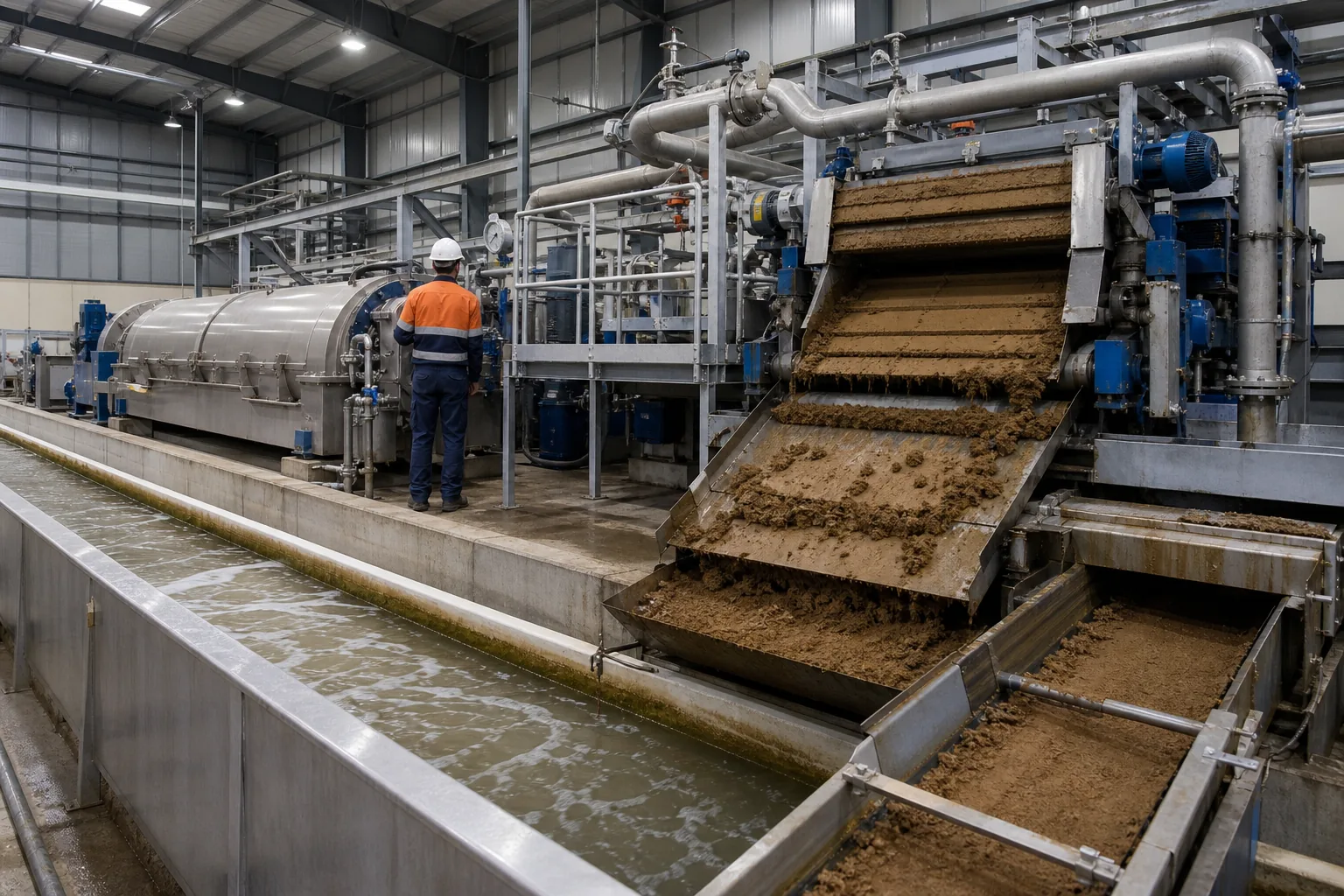
Characterize the sludge shift
Primary, waste-activated, digested and industrial sludges present different charge demand, bound water, fiber and mineral content. Blend ratio and storage time can change the response within one plant.
Retain total solids, volatile fraction where available, pH, conductivity, temperature, upstream chemicals and feed age with every test.
Simulate the machine stress
A gentle beaker floc may fail in a centrifuge feed zone or through belt-press distribution. Include a repeatable shear step and evaluate release water, floc recovery and residual fines before machine trials.
Normalize polymer use to active product per dry solids. Record neat product strength and solution flow so apparent dose is not distorted by preparation concentration.
Use machine economics
Compare throughput, centrate or filtrate quality, cake solids, torque or belt speed, wash-water demand and handling. The cheapest product per kilogram may have the highest delivered treatment cost.
A purchase record should preserve the approved sample, preparation method, operating window, product code and lot-level documents.