
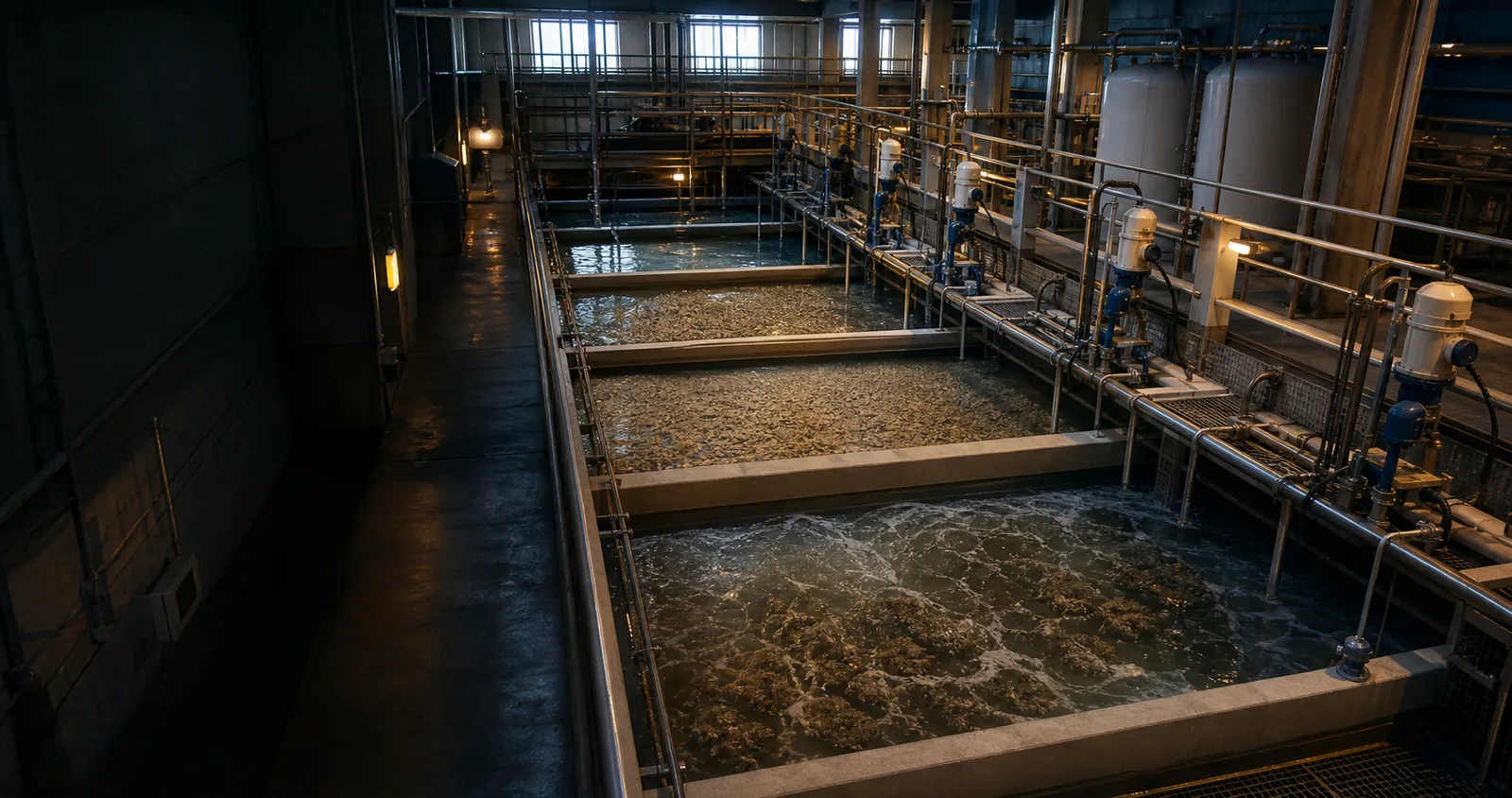
Map the solids and recycle loop
Clay fraction, grinding chemistry, hardness, salinity and recycle-water accumulation can change polymer response. Sample the actual slurry and process water rather than rebuilding the feed in clean laboratory water.
Record solids concentration, particle-size context, pH, conductivity, upstream reagents, separator and normal feed variability.
Measure the full separation
Track initial settling, interface movement, overflow clarity, compacted volume and floc response after shear. For thickeners include feedwell dilution, bed behavior and rake constraints; for wash circuits include recycle clarity and sludge withdrawal.
Reject a dose that produces attractive floc but unstable overflow or an unmanageable bed.
Confirm the operating boundary
Repeat the selected window at high fines, changed water chemistry and normal hydraulic peaks. Scale on dry solids and preserve the contact sequence between dilution, injection and the separator.
Include site water data, sample requirement, packaging, destination and expected monthly demand in the commercial enquiry.