
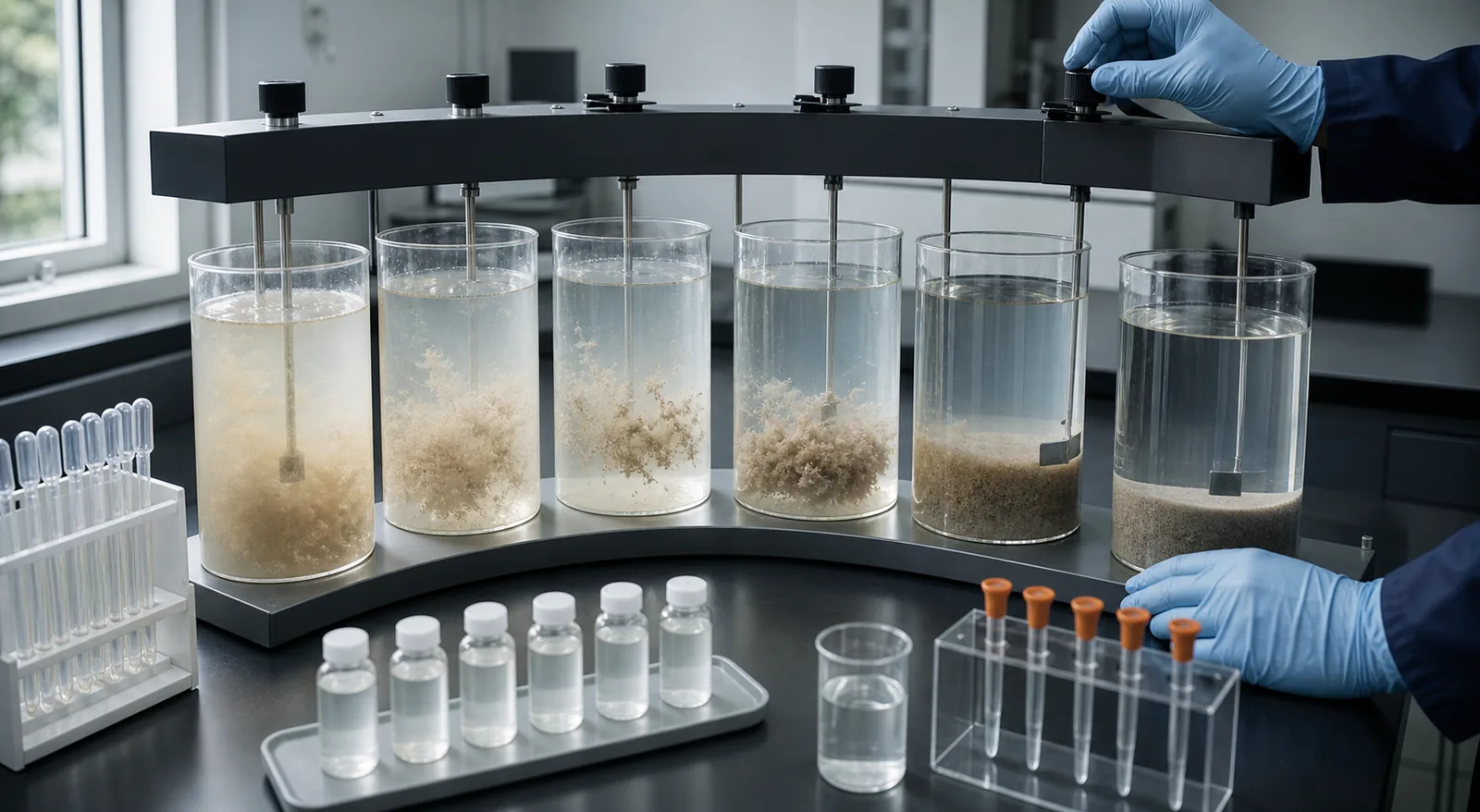
Define the purchasing duty
A useful sample request narrows a purchasing decision instead of collecting unrelated powders. Buyers should specify the separation problem and ask for a small identifiable candidate set whose preparation and production acceptance can actually be compared.
Keep the proposed commercial product connected to the feed, preparation route and separator that will decide acceptance.
Ask for an interpretable candidate set
Provide feed origin, upstream treatment and equipment before requesting specific codes. Where charge demand is unresolved, compare charged families and a nonionic or low-charge comparator deliberately. The charge-selection procedure organizes the screen; it does not establish a grade from wastewater color.
Ask the supplier to state why each candidate belongs in the set and which property or process question the comparison is intended to resolve.
Make the sample traceable
Request product form, commercial code, sample identifier, relevant data sheet and product-specific preparation guidance. Keep enough retained material for repeated work. An anonymous bag described only as high molecular weight cannot reliably be connected to a later quotation or delivery.
Use an incumbent reference where available, and identify whether the supplied sample represents a proposed commercial grade or an exploratory formulation.
Budget for the acceptance route
Provide the feed and plant-test opportunities needed after bench screening. Use the dose-curve method to narrow candidates before expensive machine time. Define who records results and which output limits decide whether a limited first purchase is justified.
Do not imply full production approval when only one small laboratory test has been completed.
Check an apparently favorable result
If every sample appears excellent at the first tested dose, reduce the starting range and check measurement sensitivity before declaring them interchangeable. A deliberately excessive dose can conceal useful product differences and create a costly proposed order.
Record unresolved conditions separately from completed qualification. A proposed benefit is not a measured plant result.
Keep an acceptance record
Attach candidate code, sample lot, preparation, feed condition and measurement method to the purchase decision. Preserve failed points as well as the preferred condition so later supply can be reviewed against the actual evidence.
| Requirement | Evidence | Approval boundary |
|---|---|---|
| Candidates | Identified family and comparison purpose | Set answers a real decision |
| Traceability | Code and sample reference | Quotation can follow the sample |
| Acceptance | Bench and production scope | Order does not exceed evidence |
Request the right sample and quotation
Send feed and equipment details, incumbent information, available sample volume, target measurements and decision schedule. State which laboratory and plant tests are available before asking for a bulk offer.
Include quantity, destination and document needs in the sample and RFQ record. Review quality and supply controls with Gongyi Xinqi Polymer Co., Ltd.; confirm the offered grade and commercial terms before ordering.
Request a product and supply review
Send the feed, separator and intended purchase scope.